Mindful Meet
Eco-Conscious meeting lifecycle optimization for balancing mental health, bandwidth, and environmental footprint
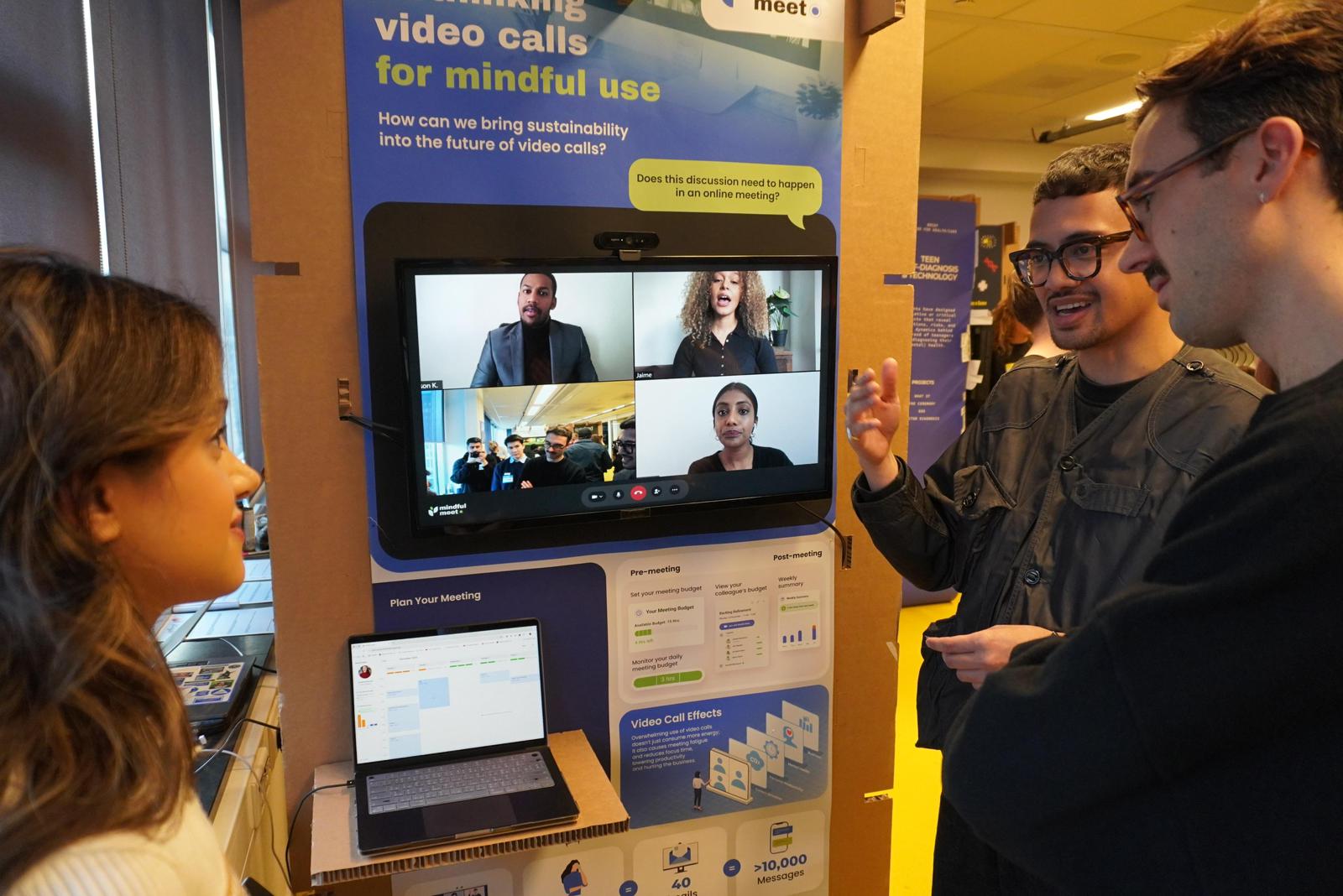
Role
Product Designer / UX Strategist
Tools
Miro, Figma,Touchdesigner, FigmaMake
Platform
Calendar, Video call
For quicker overview, read the boxes.
"How might we translate the 'weightless' myth of the cloud into a tangible sense of digital scarcity?"
Design process overview
Target Audience
Designers, Design agencies, students of tech-related degrees, policymakers involved in tech policy, general public
Brainstorming
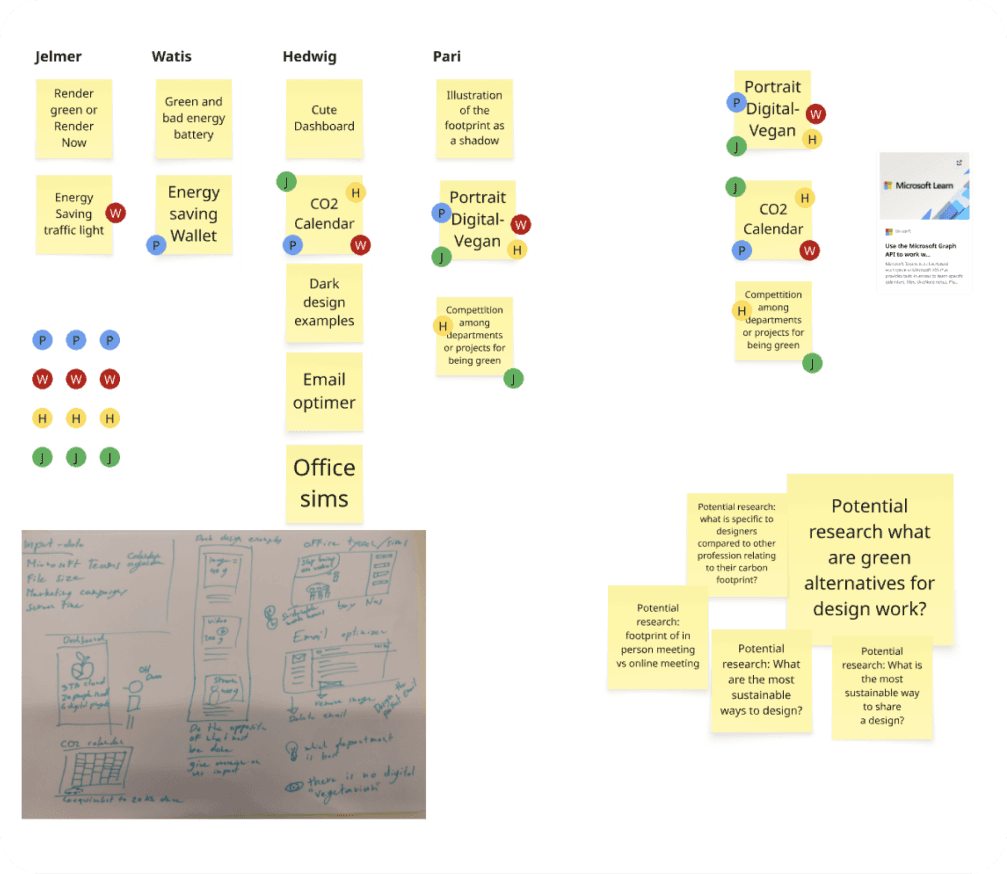
Using Crazy 8 brainstorming, we mapped the design space before evaluating each idea for feasibility and viability. Through team voting and documented feedback sessions with a professional agency, we filtered our exploration down to three high-potential concepts.
Early Ideas
We evaluate primary concepts to determine the most viable direction. By developing detailed storyboards and sketches for each, we weigh pros and cons while identifying potential challenges.
Consulting with peers and mentors provides critical insights. This feedback allows us to align our iterations with our core principles: Educate, Guide, and Estimate.
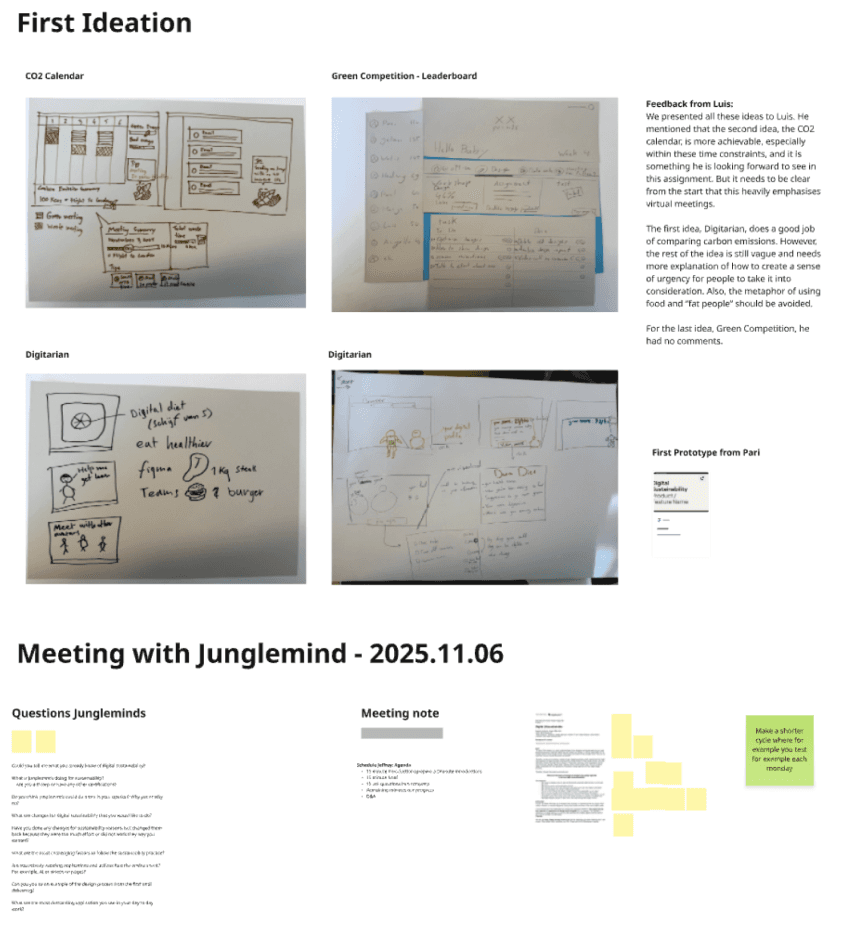
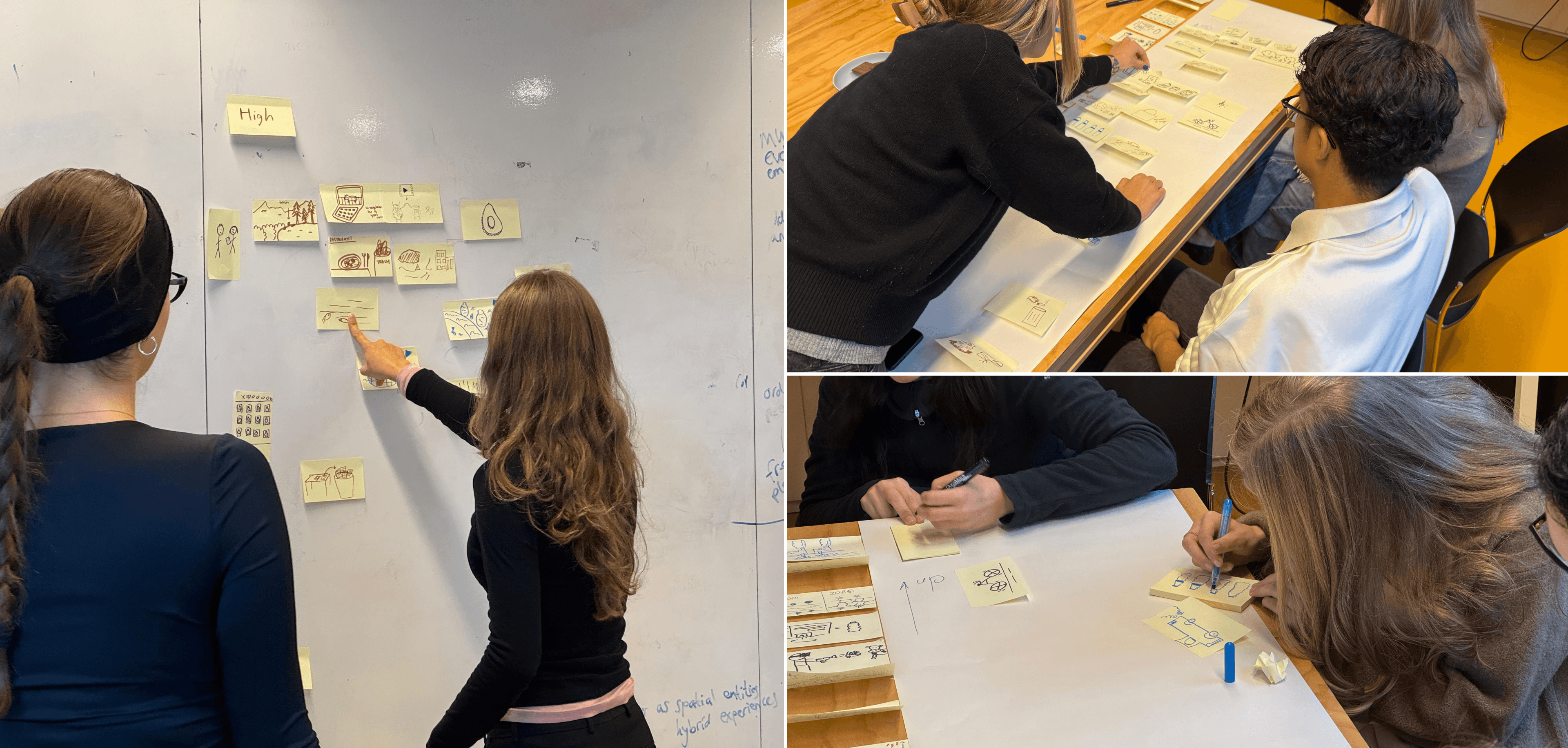
We also conducted two workshops with five participants each, asking them to define and clarify their assumptions of sustainability on paper. This allowed us to align our rationales with what’s impactful and translate user-defined contexts directly into the product’s core features.
Interviews
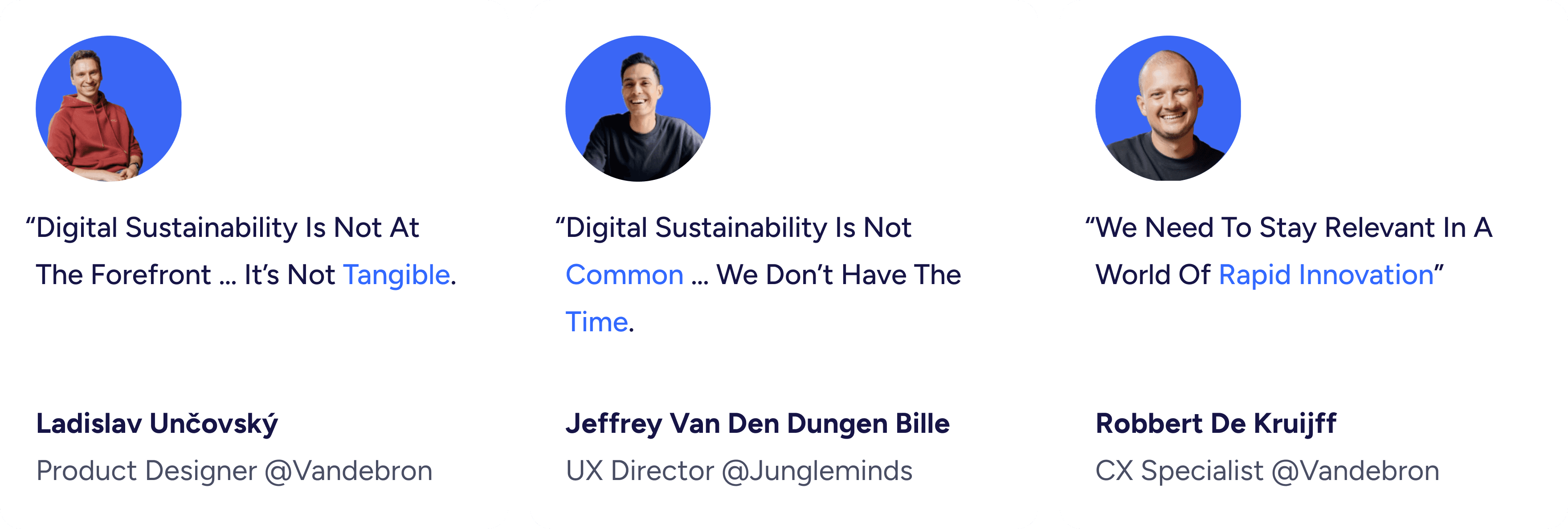
We held three individual meetings with experts from two agencies. Their perspectives helped shape our core design parameters and revealed why sustainability is often not prioritized in professional environments.
Enough data to define the pillars
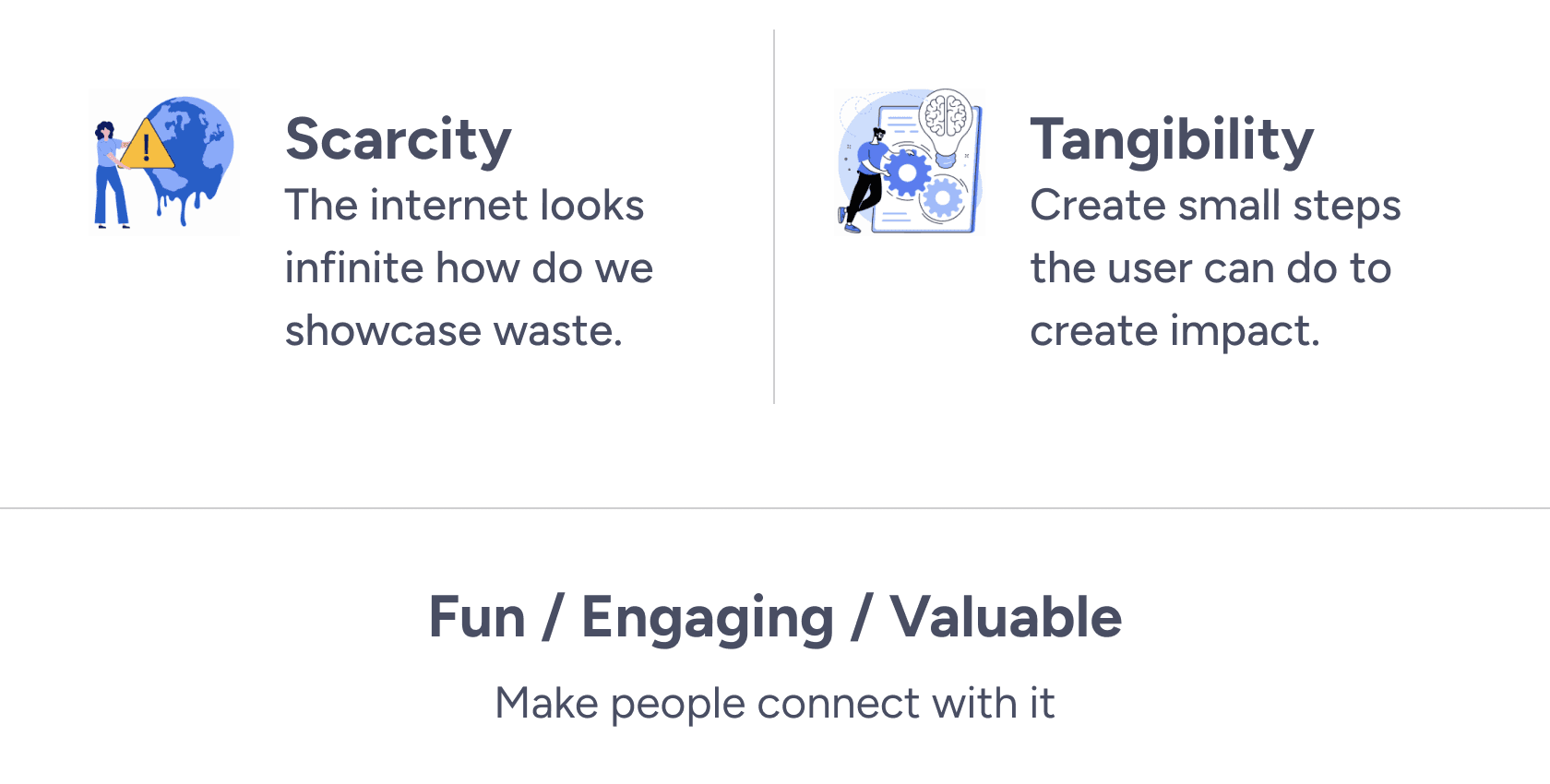
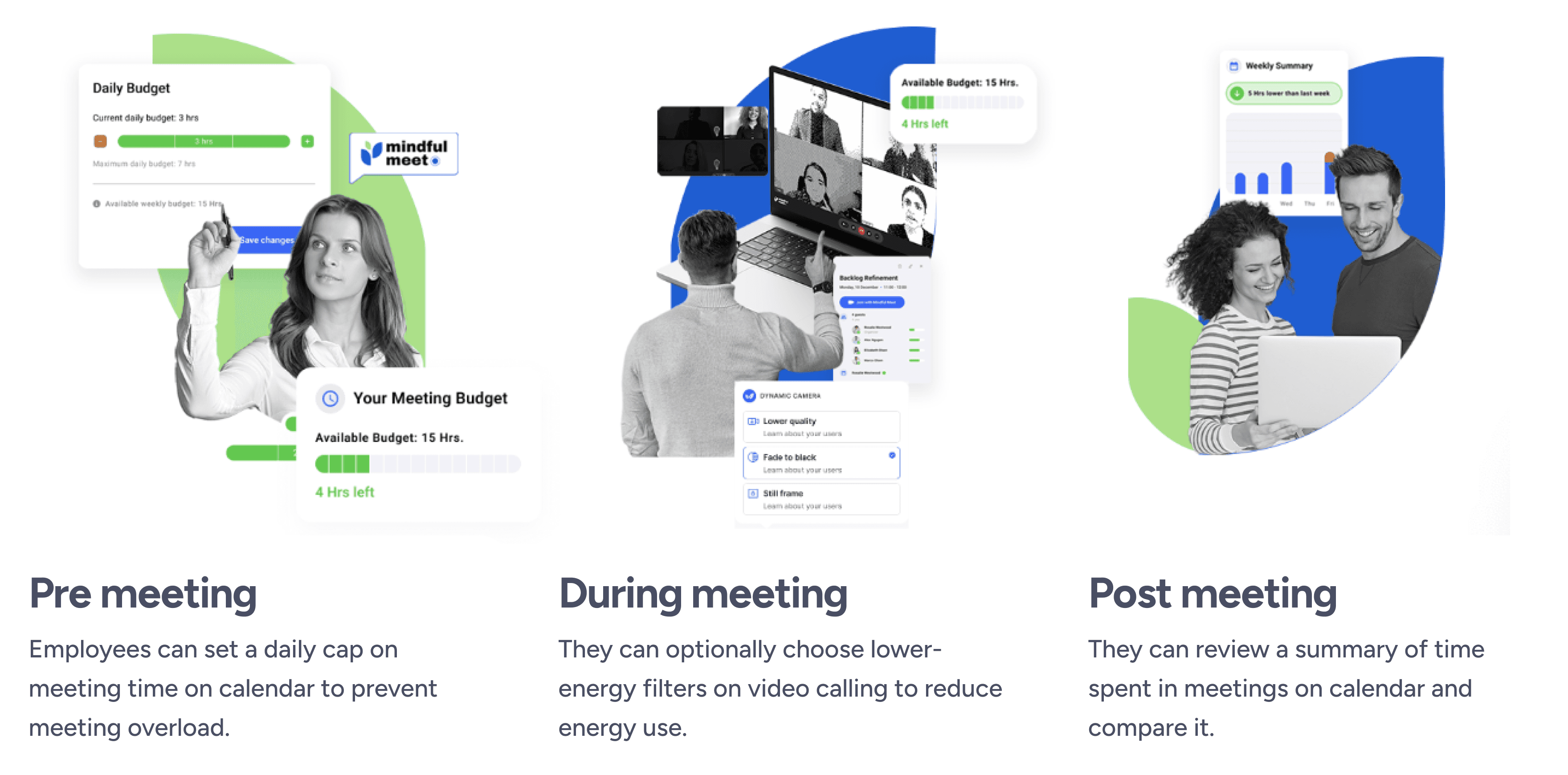
We identified the core pillars of our project and maintained them as consistent guides. Specific examples of these will be presented in the Making chapter. Based on our research, we decided to intervene across the entire online meeting lifecycle: Before, During, and After.
Setting initial questions
HMW introduce digital scarcity into a world of unlimited consumption?
HMW nudge users toward greener habits without creating friction that compromises business viability?
HMW challenge the "always-on" 4K video standard to reduce data waste without making users feel disconnected?
HMW translate abstract CO₂ data into inspirational, human-scale benchmarks?
So … Online meeting lifecycle is:
Ok, What could be possible solution?
We introduce interventions to nudge users to a more sustainable behavior through online meetings, by introducing video modes during meeting, and specific features implemented in calendars.
Video modes
Why do we use the same video call format for every interaction when meeting types vary so significantly? Our solution moves beyond static filters, introducing conscious, dynamic interventions applied to all participants to reflect the specific needs and environmental impact of each session.
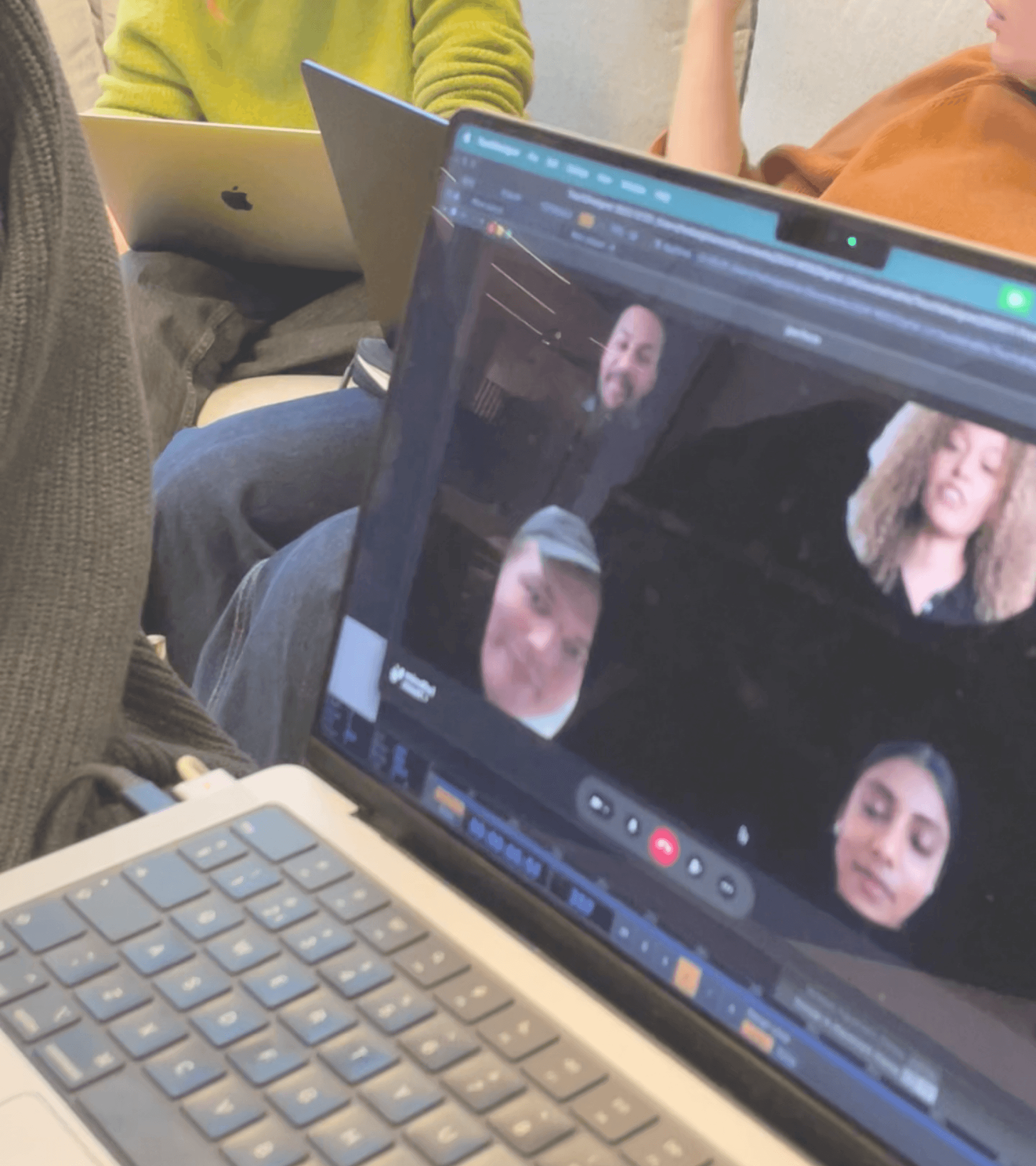
Mindful Meet introduces modes to challenge "always-on" 4K standards by introducing first 3 interventions in online meetings.
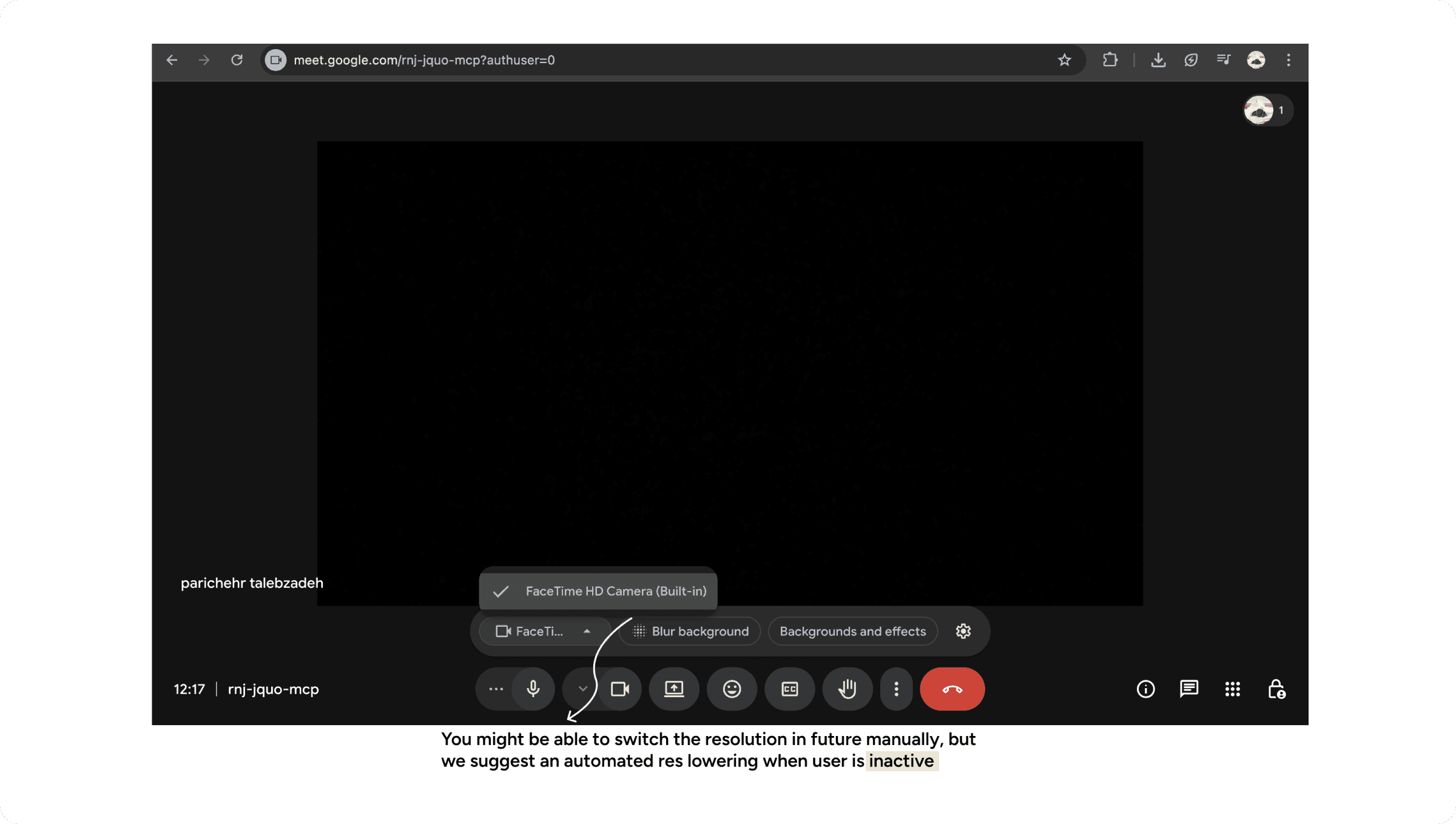
Low-resolution
While you can manually lower your resolution, why doesn't the system automate this when high fidelity isn't required in corporate meetings? Everyone retains the ability to see each other's impressions, while inactive participants receive less data/Mental heavy attention.
Light On/Off
"Light On/Off" dims inactive participants, and lightens them up once they start talking.
Enhancing focus for some, though creating "stage fear" for others, this can be used in small meetings like a project daily.
Pixelation
"Pixelation" provocatively saves data while questioning digital presence. How many pixels and colors do we actually need to feel present and connected?
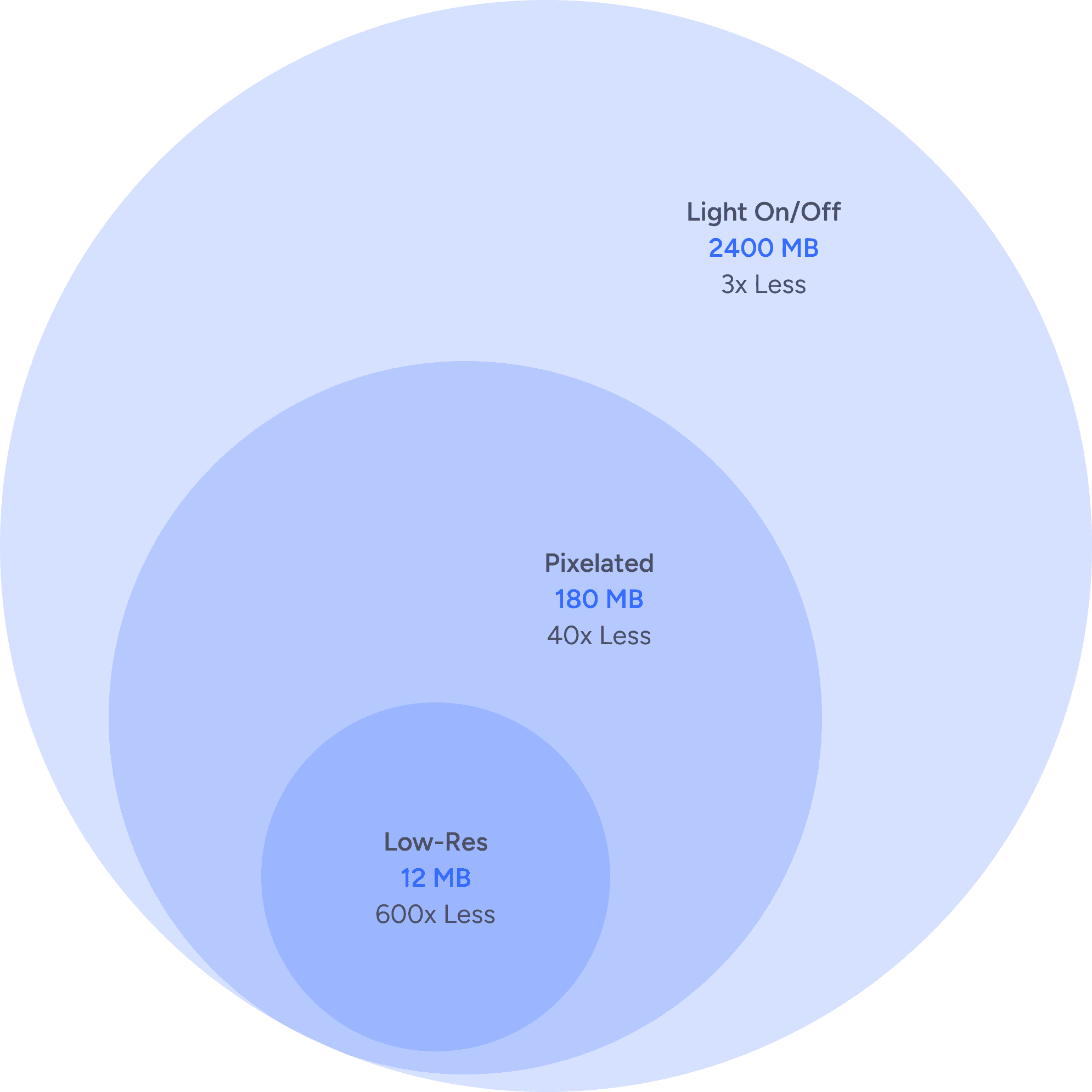
Data used in 1 hour of default video calling is 7,2 Gb.
To validate our impact, we compared the file sizes of saved videos over a set duration to determine if rendering these filters created a measurable difference. While we recognize this is an elementary method of estimation, it served as our primary baseline for calculating data intensity and potential carbon savings.
Calendar
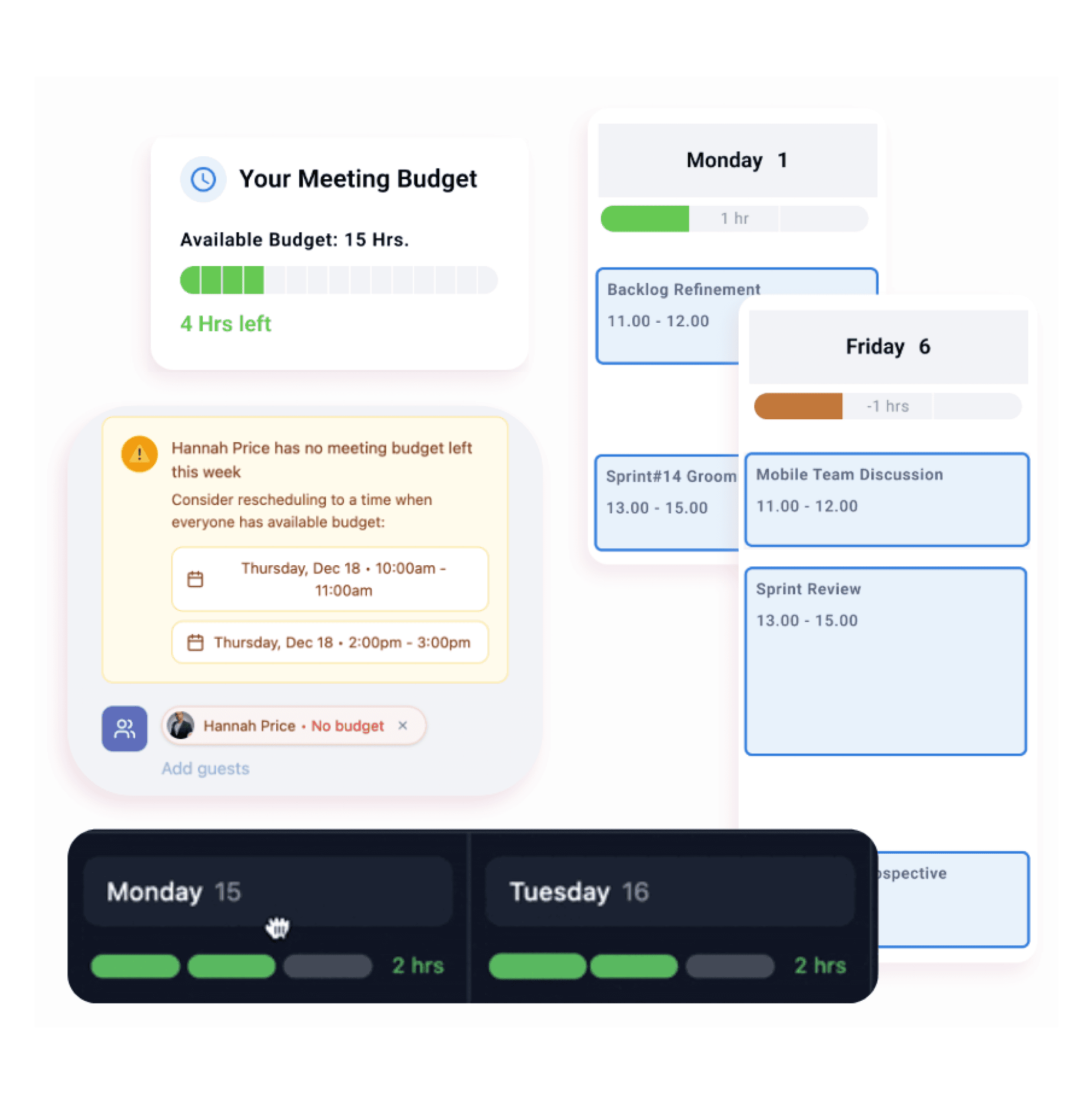
Initial design was created to visualize the features and design functionalities
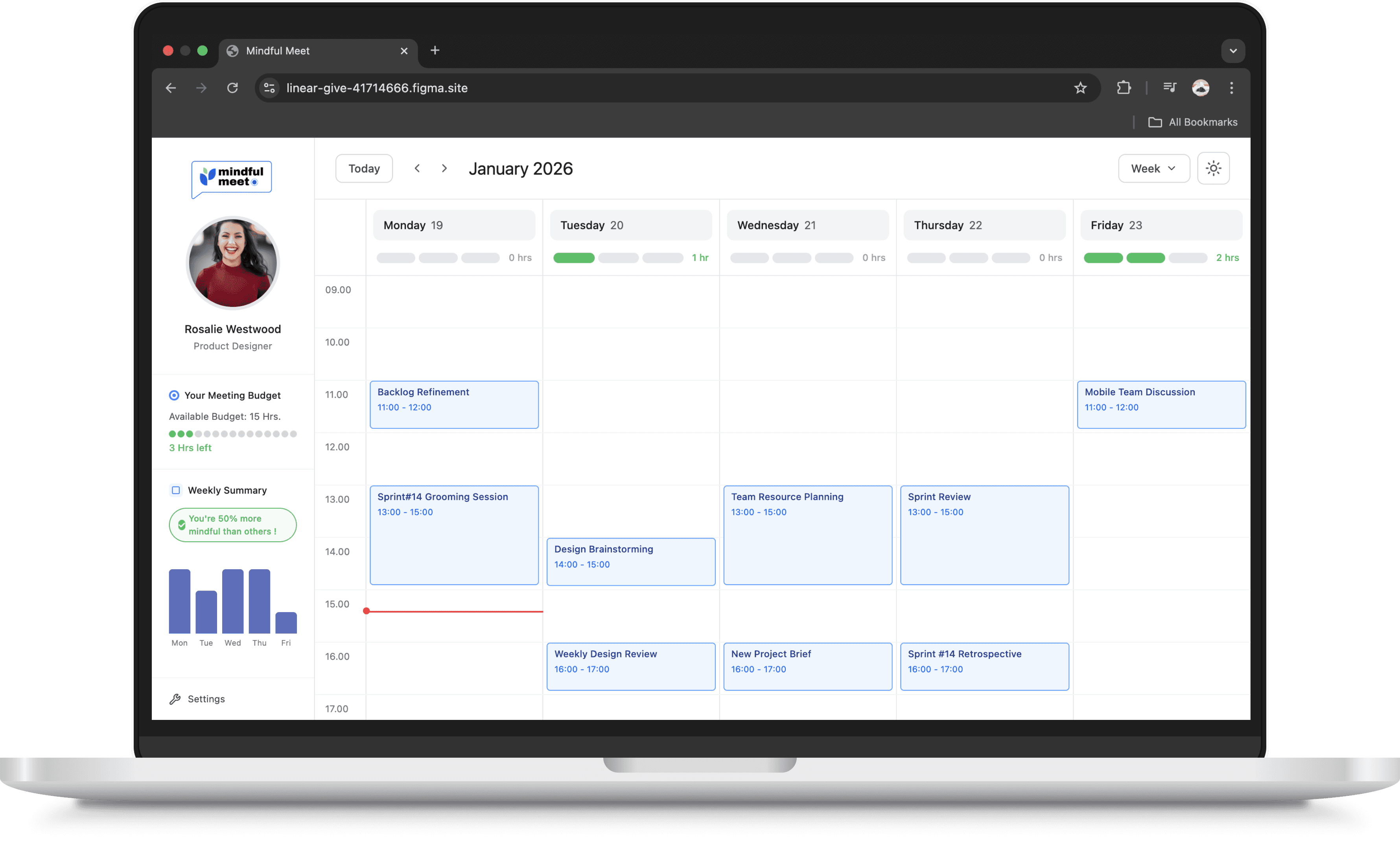
Functionality overview
Set a daily meeting budget cap (Maximum time for meeting) which can be exceeded
Suggestion for rescheduling (Considering other participant’s budgets)
Clarify remained budget of colleague to avoid burnout
Exchanging budget between days in favor of flexibility
Showcase of Daily and weekly summary with inspirational comparison
Light mode/Dark mode
Limitations
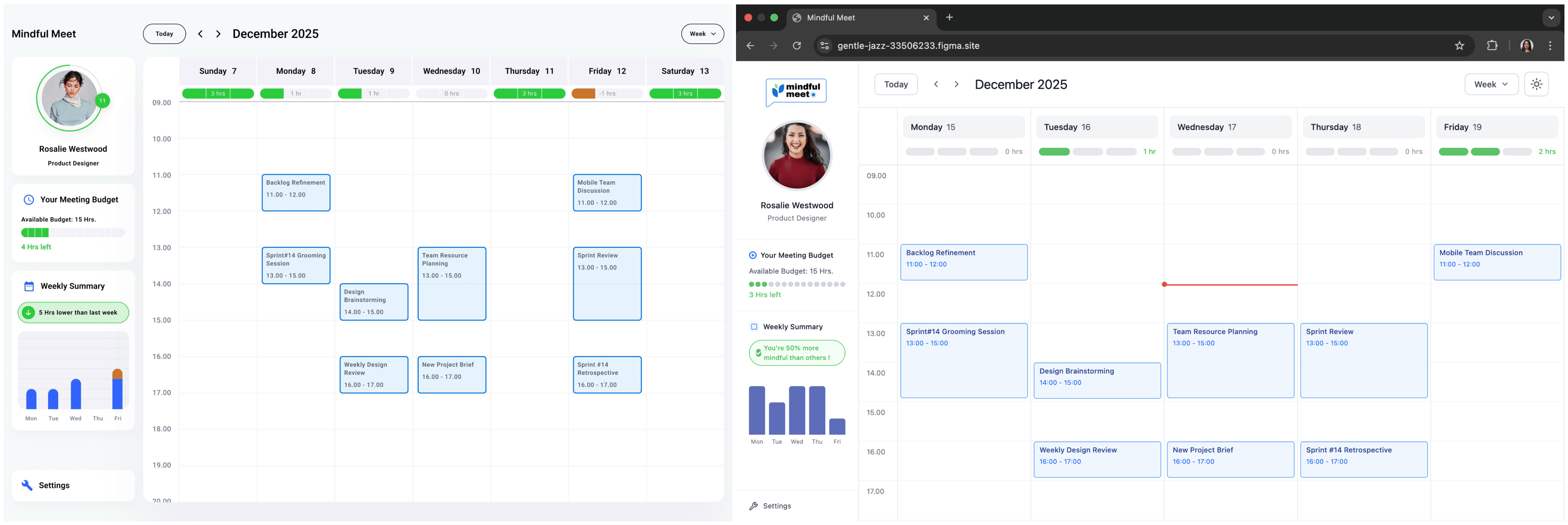
I provided Figma Make with our design on the left and requested specific system features, but the result on the right emerged instead. Despite the obvious differences, it successfully served its purpose and conveyed the intended meaning.
Edge cases
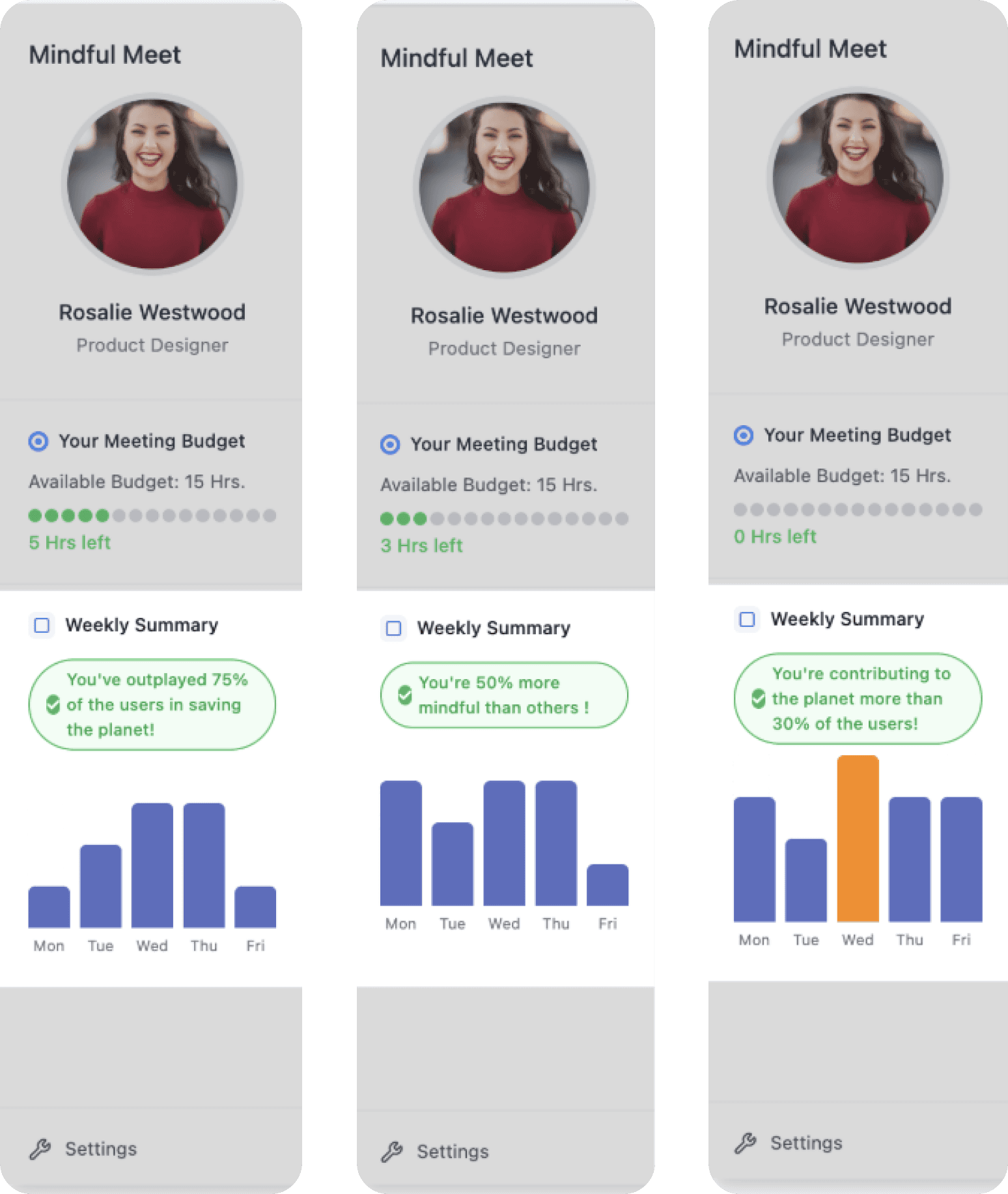
I addressed specific edge cases to ensure the system responded dynamically to user behavior:
Dynamic Personalization: Inspirational quotes are personalized and scale based on the user's weekly budget consumption, ensuring the "nudge" is relevant to their current impact.
Temporal Differentiation: The system distinguishes between past meetings (requiring reflection) and upcoming meetings (requiring proactive toasts and alerts), providing the appropriate action for each stage.
Borrow budget
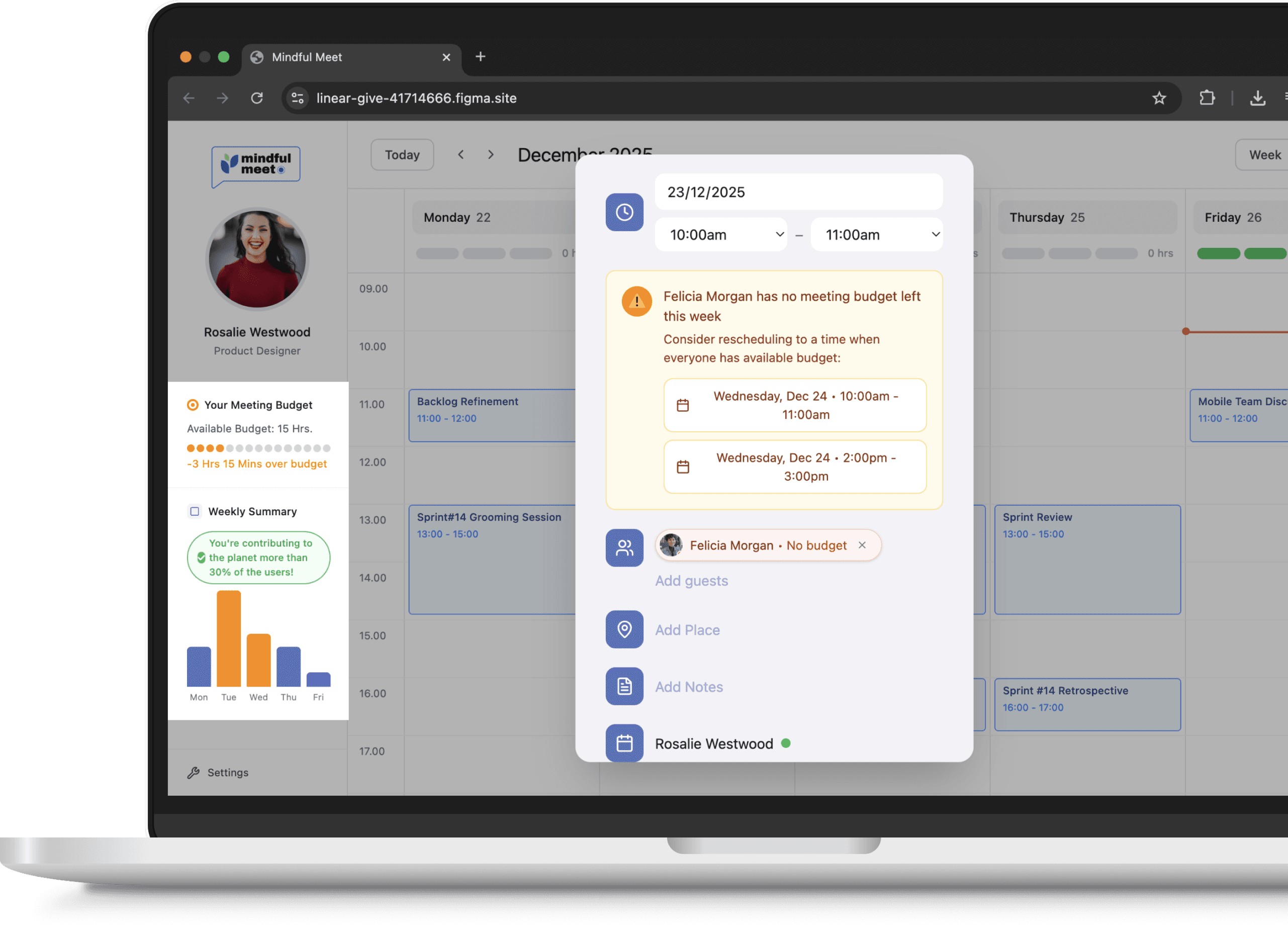
We iterated toward a supportive model where users receive rescheduling nudges but maintain the flexibility to override them.
When a guest runs out of budget, the tool suggests mitigation options to the organizer. However, these suggestions are designed to be non-intrusive and can be easily ignored to avoid disrupting the meeting flow.
Key takeaways
I believe we must accept that our current tools are imperfect proxies, necessary bridges to a broader cultural shift toward digital sobriety, the idea that we should use only the digital resources we truly need. We should constantly challenges the assumption that digital growth must be infinite.

While we are aware that significant maintenance and refinement remain for the current version, such as:
Logic Optimization: The budgeting algorithms need further stress-testing to handle complex, recurring meeting patterns.
Visual Fidelity: The UI transitions between different meeting states require smoothing to ensure a seamless user experience.
Integration Depth: Deeper API synchronization with various calendar providers is necessary to improve the accuracy of online meeting detection.
Question: How can we find ways for online meetings to highlight digital scarcity and encourage mindful use of online meetings?
Answer: By making the users' end goal not focus solely on reducing energy but also being sustainable for mind and planet.
What would I do differently/More?
Future iterations will include automated "Resource Cleanup" to address the environmental cost of "zombie data" (redundant cloud files). Reducing file sizes by just 1KB can save 3,000kg of CO₂ monthly, challenging unnecessary long-term recordings (Jones, N., 2018).
Also we may suggest “greener hours” for certain activities to be rescheduled to perform automatically.